How VTU APIs Work (For Developers)
VTU APIs (Virtual Top-Up Application Programming Interfaces) allow developers to integrate airtime, data, and bill payment services into websites, mobile apps, and fintech platforms. These APIs act as the connection between a VTU platform and telecom providers, enabling automated digital transactions.
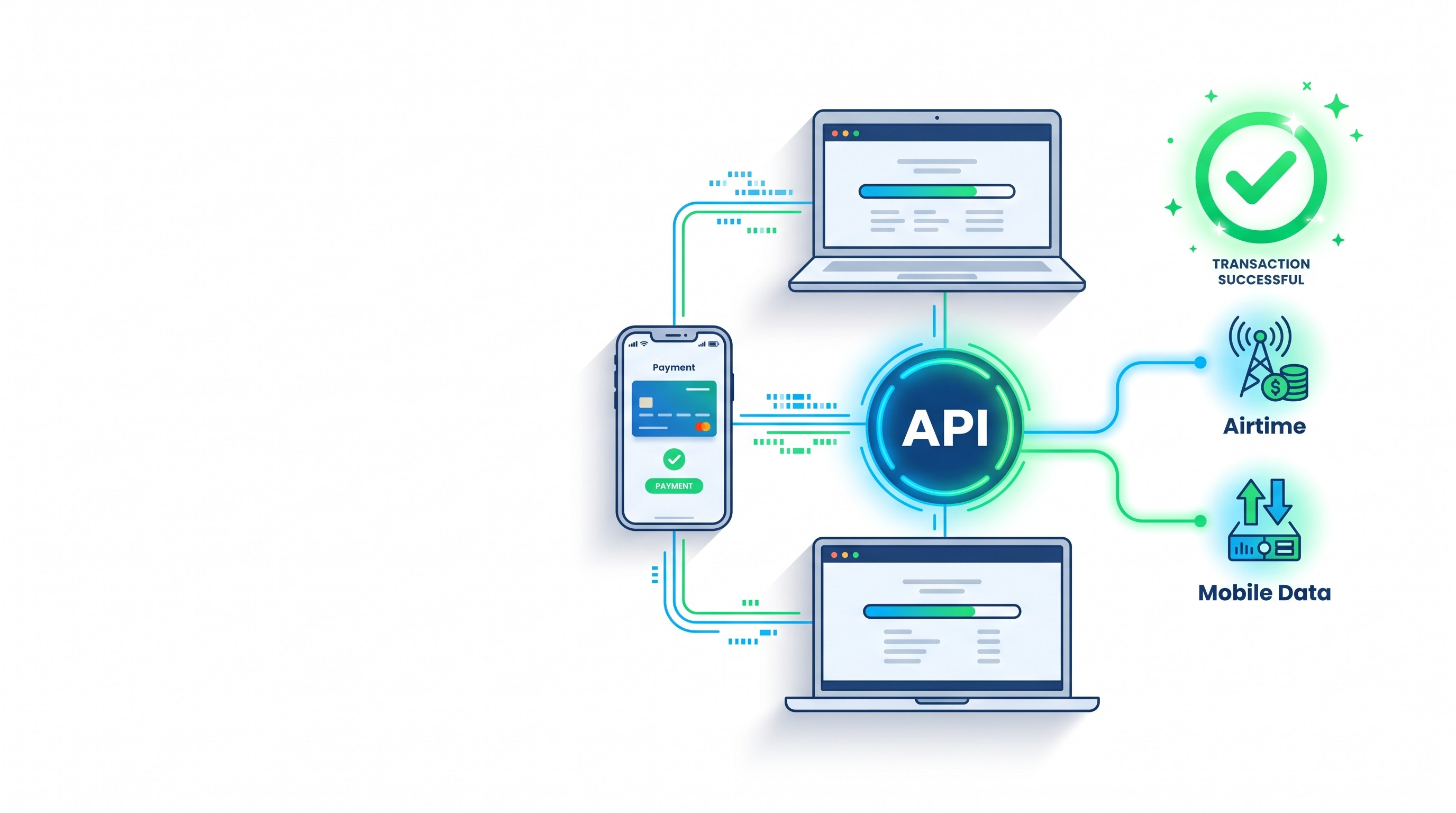
At a basic level, a VTU API exposes endpoints that accept requests from your application and return responses from the VTU system. When a user initiates a recharge, your system sends a request to the VTU API, which then communicates with the service provider and delivers the airtime or data.
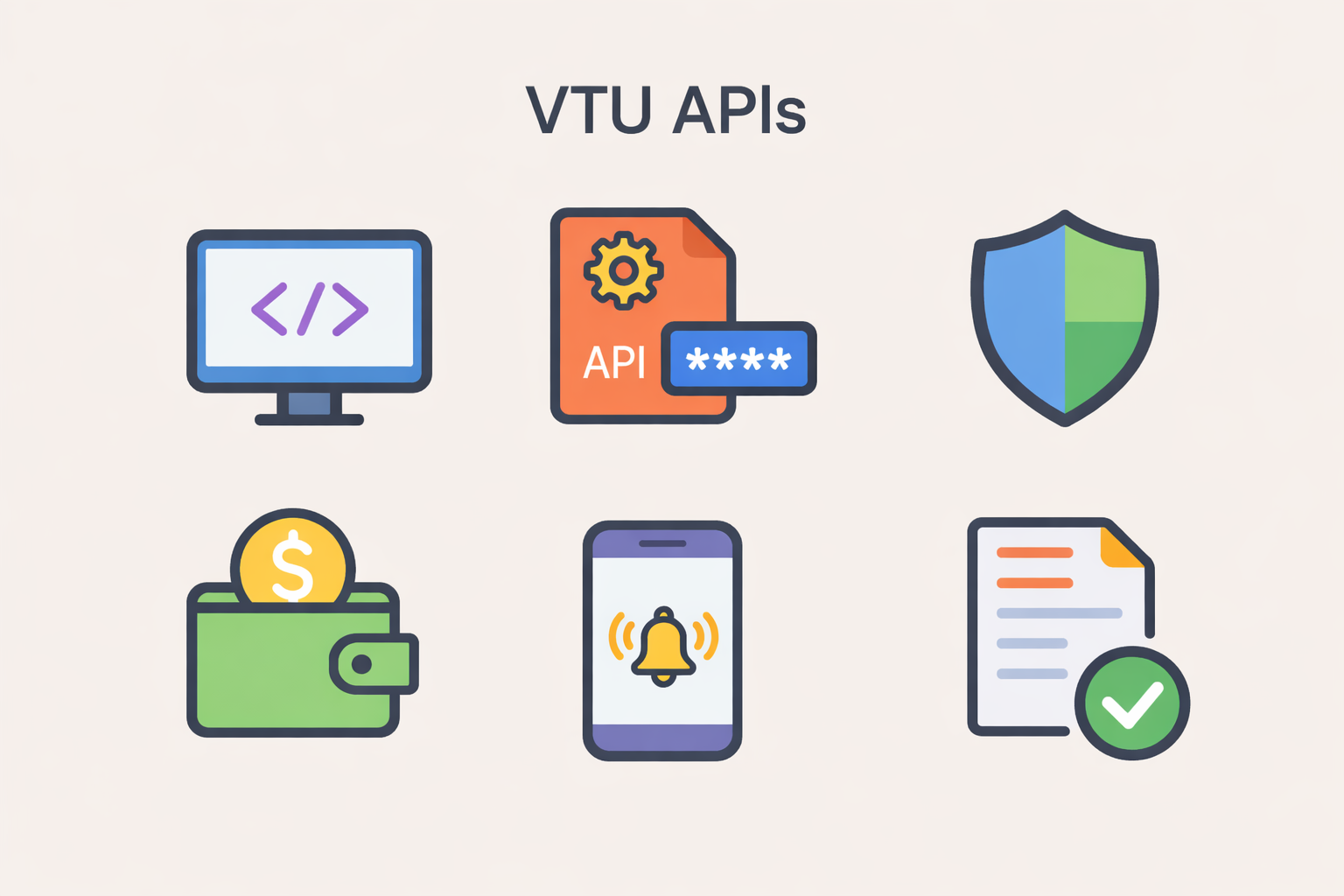
The first step in using a VTU API is authentication. Most VTU APIs require an API key, secret key, or token to identify and authorize your application. This ensures only approved platforms can access the service and perform transactions.
Once authenticated, your application sends a recharge request. This request usually includes parameters such as the phone number, network provider, service type (airtime or data), amount, and a unique transaction ID. The API validates the request before processing it.
After validation, the VTU API routes the request to the appropriate telecom or service provider. This process happens in real time. If the provider confirms the transaction, the VTU system immediately completes the recharge and updates the transaction status.
The API then sends a response back to your application. This response typically includes a success or failure status, transaction reference, and message. Developers must always parse this response to determine the next action in the app or website.
Handling failed or pending transactions is a crucial part of VTU API integration. Network issues, provider downtime, or insufficient wallet balance can cause failures. Well-designed systems automatically retry, reverse, or flag these transactions for review.
Most VTU APIs operate using a wallet system. Before transactions can be processed, developers must fund their VTU wallet. Each successful API call deducts the transaction amount from the wallet balance, making balance monitoring very important.
Security is critical when working with VTU APIs. Developers should use HTTPS, store API keys securely, and restrict access to authorized IPs where possible. Logging and monitoring also help detect suspicious activity early.
VTU APIs often support webhooks or callbacks. These allow the VTU platform to notify your system about transaction updates asynchronously. Webhooks are especially useful for confirming delayed or pending transactions.
Testing is usually done using a sandbox or test environment. Developers can simulate transactions without real charges, helping them debug issues before going live. This reduces errors and improves reliability.
Performance and uptime matter a lot in VTU services. Developers should design systems that handle timeouts gracefully, cache responses when needed, and switch to backup APIs if available.
In conclusion, VTU APIs simplify the delivery of digital recharge services by automating transactions through secure, real-time integrations. For developers, understanding authentication, request flow, error handling, and security is key to building a reliable VTU platform.
E
Written by Ezra De Blogger
Inlomax Technologies Limited is a licensed telecom aggregator and digital payments infrastructure provider in Nigeria. Our insights are fact-checked against official telecom tariffs (MTN, Airtel, Glo, 9mobile) and Nigerian fintech standards.
Verified Contributor • Inlomax Editorial Team
Power Your VTU & Bill Payments with Inlomax
Get unbeatable reseller rates on MTN, Airtel, GLO & 9mobile data, electricity, and exam pins instantly.
Create Free Account