Preventing Fraud on VTU Portals
Fraud prevention is a critical part of running a successful VTU portal. Since VTU platforms handle real money, airtime, data, and bill payments, they are often targeted by fraudsters looking for loopholes. A secure system protects both the business and its users.
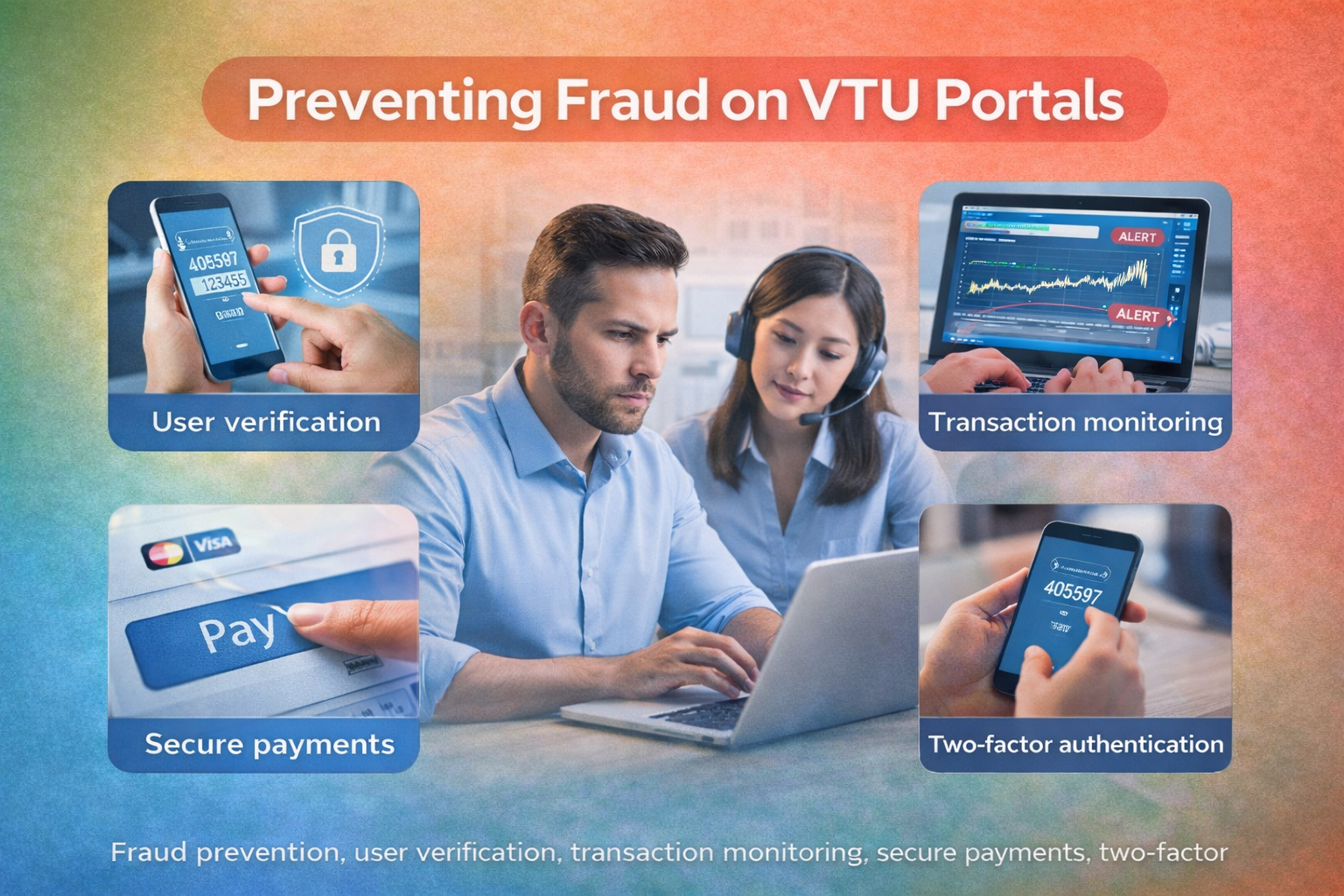
One of the first steps in preventing fraud is strong user verification. Features like email verification, phone number confirmation, and secure passwords help ensure that only genuine users can access the platform. This reduces the risk of fake or duplicate accounts.
Transaction monitoring is another powerful tool. VTU portals should automatically track unusual activities such as repeated failed transactions, abnormal wallet funding, or rapid multiple purchases. Early detection helps stop fraud before it causes damage.
Secure payment gateways also play a major role. Integrating trusted gateways for wallet funding ensures that payments are processed safely. This reduces risks such as chargebacks, fake deposits, and payment manipulation.
Limiting transaction attempts can further improve security. Setting daily limits on wallet funding, withdrawals, or purchases helps prevent large losses if an account is compromised. It also discourages automated fraud attempts.
Two-factor authentication adds an extra layer of protection. When users must confirm logins or transactions with an OTP or code, it becomes harder for attackers to gain unauthorized access.
Admin controls are equally important. A well-designed VTU portal allows admins to review transactions, suspend suspicious accounts, and manually approve sensitive operations. Human oversight strengthens automated systems.
Clear refund and dispute policies also help prevent fraud. When users know how refunds work, they are less likely to attempt false claims. Automated refunds for genuine failed transactions improve transparency.
Educating users is often overlooked but very effective. Teaching users how to protect their login details, avoid phishing links, and recognize fake support messages reduces fraud from the user side.
Regular system updates and security testing keep the platform strong. Updating APIs, fixing bugs, and applying security patches help block new fraud techniques as they emerge.
In the long run, fraud prevention builds trust. A VTU portal that consistently protects user funds and data earns credibility, attracts more users, and grows sustainably in a competitive market.
E
Written by Ezra De Blogger
Inlomax Technologies Limited is a licensed telecom aggregator and digital payments infrastructure provider in Nigeria. Our insights are fact-checked against official telecom tariffs (MTN, Airtel, Glo, 9mobile) and Nigerian fintech standards.
Verified Contributor • Inlomax Editorial Team
Power Your VTU & Bill Payments with Inlomax
Get unbeatable reseller rates on MTN, Airtel, GLO & 9mobile data, electricity, and exam pins instantly.
Create Free Account