Handling Failed VTU Transactions and Refunds
Handling failed VTU (Virtual Top-Up) transactions and refunds is a crucial part of running a trustworthy VTU platform. Since users expect instant delivery of airtime, data, and bill payments, any failure can quickly affect confidence if not managed properly.
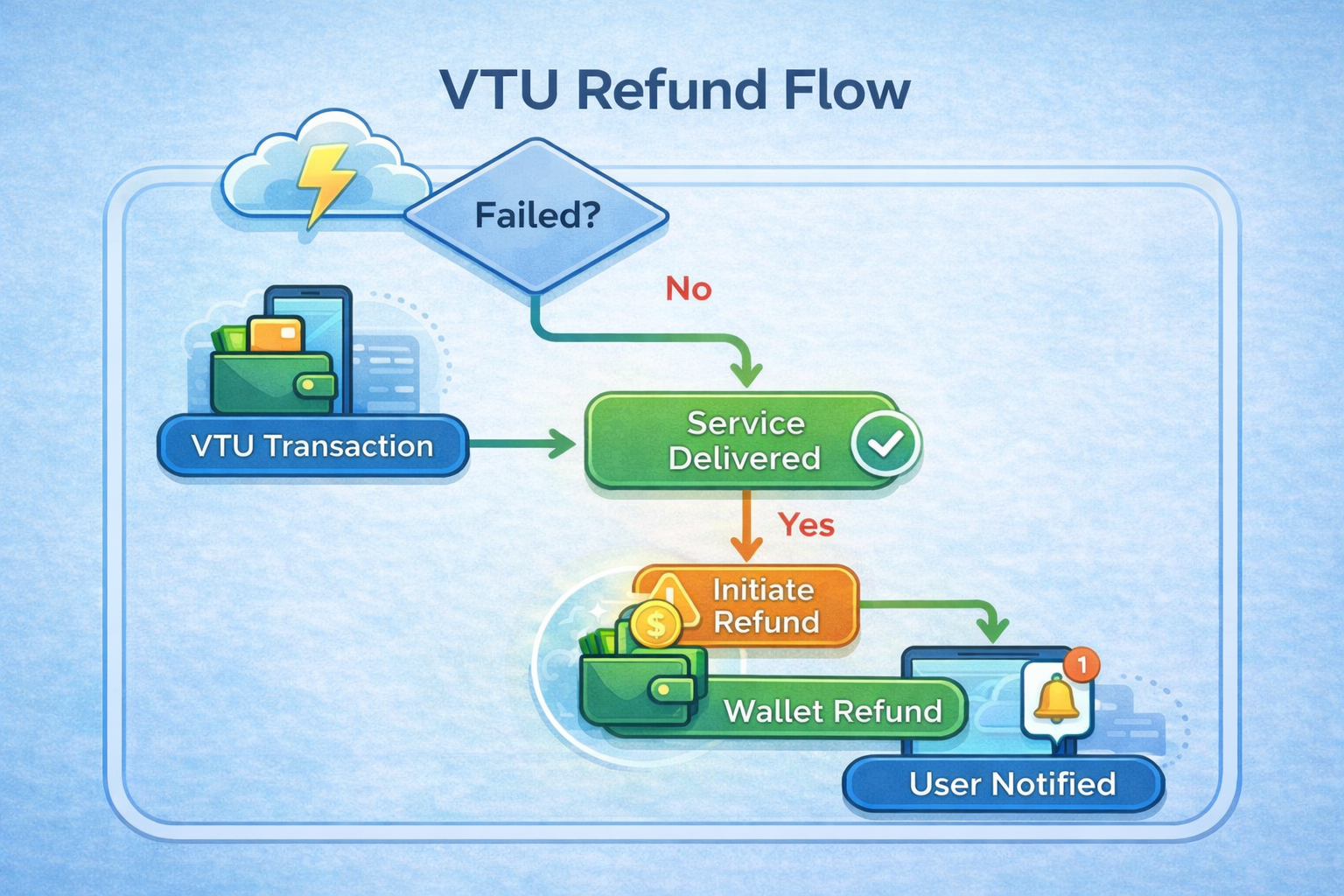
A VTU transaction usually fails when payment is completed but service delivery does not occur, or when the platform cannot confirm the transaction status. Common reasons include network instability, API timeouts, provider downtime, or incorrect request parameters.
To manage these situations effectively, VTU platforms must clearly define transaction states such as successful, failed, pending, and reversed. Proper classification helps both users and system administrators understand what action is required.
Automated monitoring systems are essential for detecting transaction issues early. These systems track transactions in real time and alert the platform when delays, errors, or inconsistencies occur.
Pending transactions require special attention. Some VTU providers need extra time to confirm delivery, so platforms should allow a reasonable waiting period before marking transactions as failed or initiating refunds.
Using unique transaction references is critical for proper tracking. Every VTU request should have a distinct ID to prevent duplication and make it easier to investigate issues during reconciliation or refund processes.
At this stage, structured handling becomes important:
1. Retry mechanisms should be applied to temporary failures such as network timeouts. Automatic retries can resolve many issues without user involvement.
2. Automatic wallet reversal should occur when a transaction is confirmed as failed. Refunding the user’s wallet instantly helps reduce frustration and support complaints.
3. Clear refund policies must be visible to users. These policies should explain refund timelines, eligible cases, and exceptions to avoid misunderstandings.
4. Admin dashboards should provide tools to review failed transactions, approve manual refunds, and escalate unresolved issues to VTU API providers.
5. Webhook and callback handling is important for receiving final transaction updates from providers. This ensures accurate transaction status and prevents premature refunds.
6. Detailed logging and record keeping help resolve disputes efficiently. Logs allow platforms to trace failures and provide proof when communicating with providers or customers.
7. Customer support training is essential. Support teams should understand transaction flows and be able to explain failures and refunds clearly and professionally.
8. Regular system testing and audits help reduce failure rates. Testing retry logic, refund workflows, and API stability prepares the platform for real-world usage.
In conclusion, handling failed VTU transactions and refunds requires a balanced combination of automation, transparency, and human support. By implementing clear processes, reliable monitoring, and fast refunds, VTU platforms can turn transaction failures into opportunities to strengthen user trust and long-term loyalty.
E
Written by Ezra De Blogger
Inlomax Technologies Limited is a licensed telecom aggregator and digital payments infrastructure provider in Nigeria. Our insights are fact-checked against official telecom tariffs (MTN, Airtel, Glo, 9mobile) and Nigerian fintech standards.
Verified Contributor • Inlomax Editorial Team
Power Your VTU & Bill Payments with Inlomax
Get unbeatable reseller rates on MTN, Airtel, GLO & 9mobile data, electricity, and exam pins instantly.
Create Free Account