Building a VTU Website or Mobile App
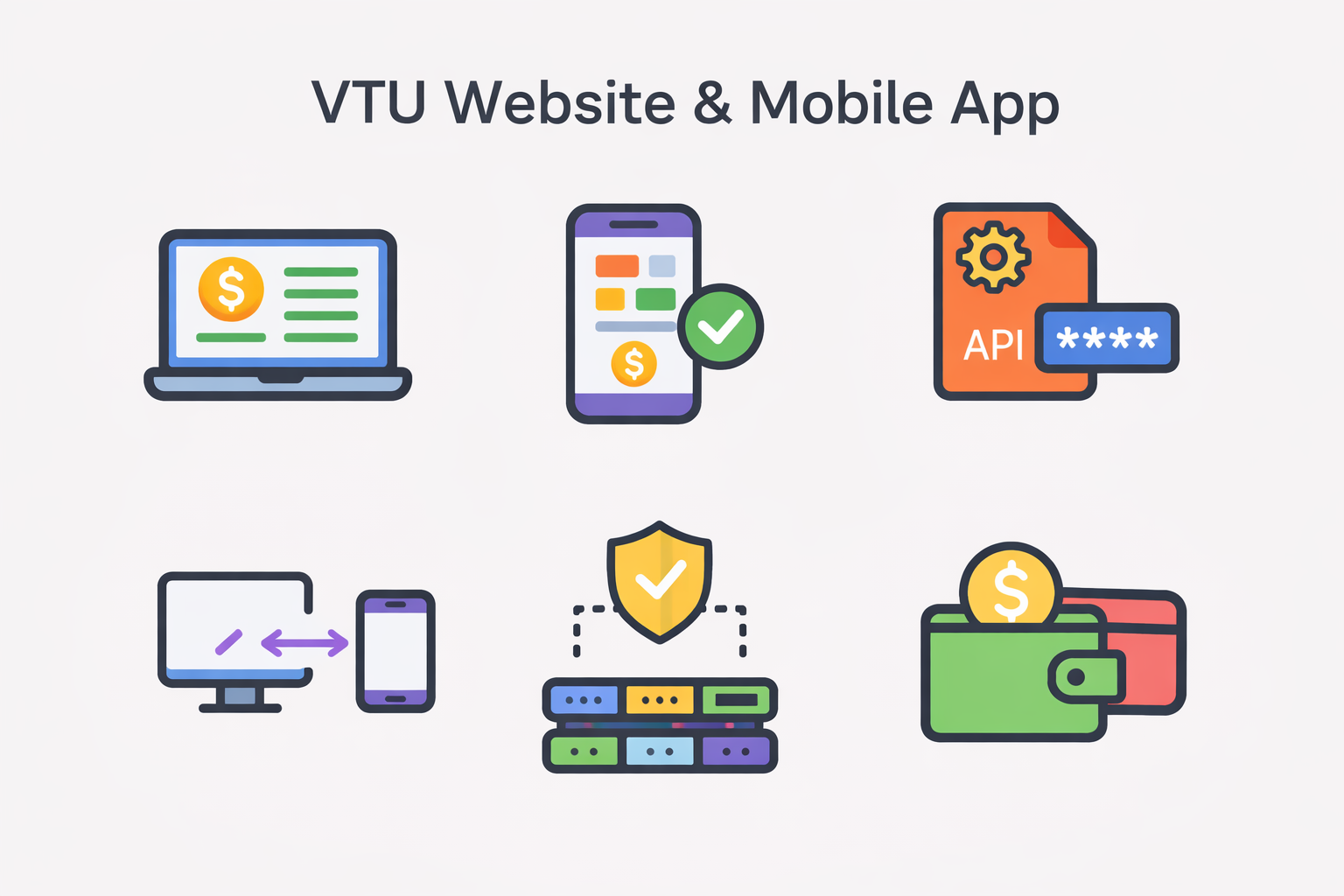
Building a VTU (Virtual Top-Up) website or mobile app is a profitable opportunity in today’s digital economy. VTU platforms allow users to buy airtime, data, pay bills, and perform other digital transactions instantly. With the increasing adoption of cashless payments, VTU services continue to gain popularity.
The first step in building a VTU platform is planning and requirement analysis. You need to define the services you want to offer, such as airtime recharge, data bundles, electricity bills, cable TV subscriptions, and exam PINs. Understanding your target users helps shape the platform’s features and user experience.
Next is choosing between a website, mobile app, or both. A website is easier and cheaper to launch, while a mobile app offers better user engagement and convenience. Many VTU businesses start with a website and later expand to Android or iOS apps.
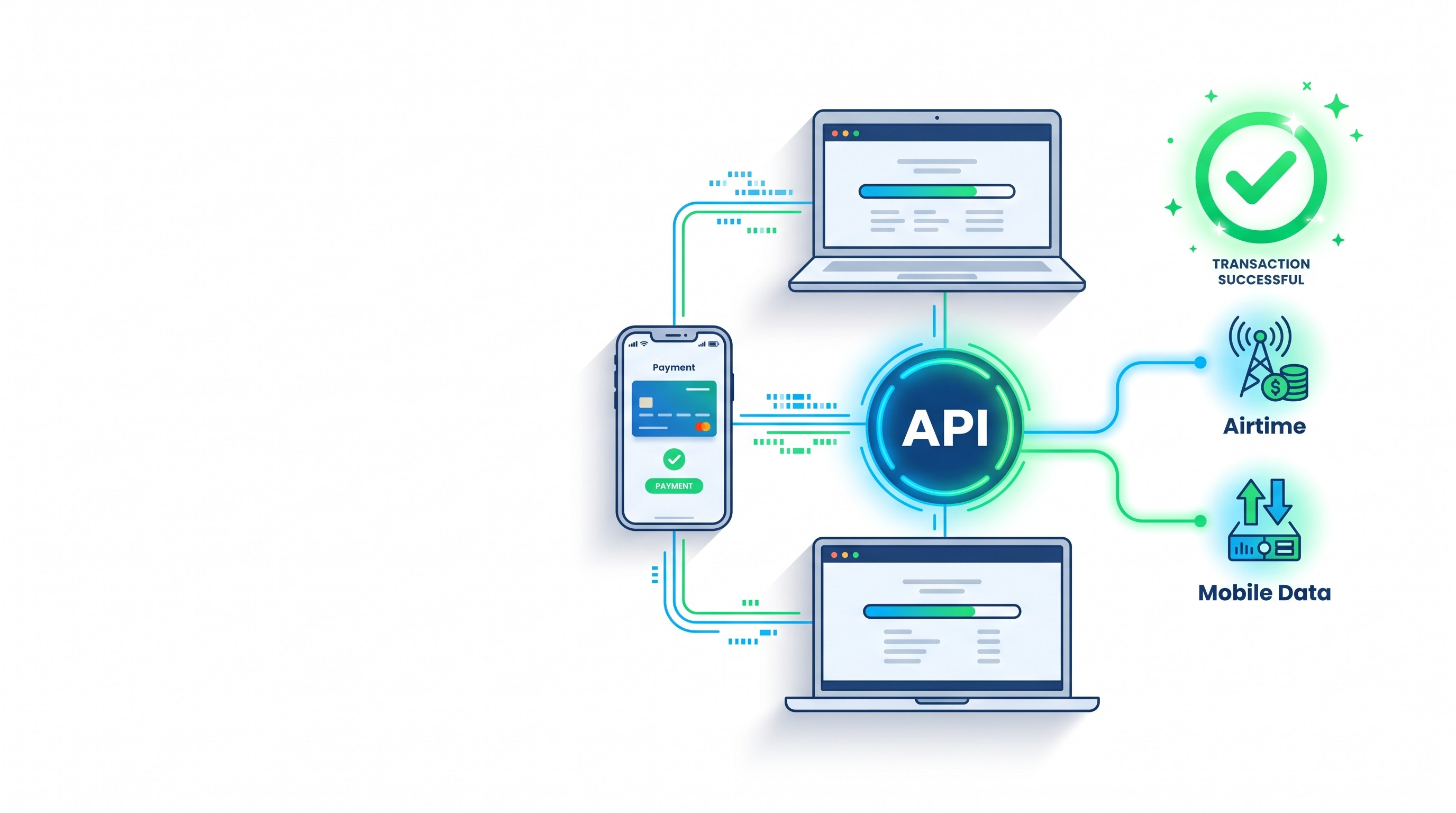
Selecting a reliable VTU API provider is one of the most critical steps. The API powers your platform by connecting it to telecom networks and service providers. A good API should offer high uptime, fast delivery, proper documentation, and responsive technical support.
The platform architecture usually includes a backend system, a frontend interface, and a wallet system. The backend handles API calls, transaction logic, and user management, while the frontend focuses on usability and design. The wallet system manages user balances and deductions.
For development, common backend technologies include PHP (Laravel), Node.js, and Python, while frontend interfaces are built using HTML, CSS, JavaScript, or frameworks like React and Vue. Mobile apps are often developed using Flutter or React Native for cross-platform support.
Payment gateway integration is essential for wallet funding. Gateways like Paystack, Flutterwave, and Monnify allow users to fund their wallets via cards, bank transfers, or USSD. Smooth payment flow directly affects user trust and retention.
Security must be a top priority when building a VTU platform. This includes SSL encryption, secure API key storage, user authentication, transaction logging, and fraud detection mechanisms. A secure platform protects both user funds and business reputation.
Testing is a crucial phase before launch. Developers should test API responses, failed transactions, wallet deductions, and refunds using sandbox environments. Thorough testing reduces errors and improves platform reliability.
After deployment, continuous monitoring and maintenance are required. Server uptime, API performance, and transaction success rates should be monitored regularly. Quick response to issues helps maintain user confidence.
User experience and support also determine success. A clean dashboard, clear transaction history, instant notifications, and responsive customer support encourage repeat usage. Simplicity is key for mass adoption.
In conclusion, building a VTU website or mobile app requires proper planning, reliable APIs, secure payment integration, and continuous improvement. With the right technical setup and user-focused approach, a VTU platform can grow into a sustainable and profitable digital business.
E
Written by Ezra De Blogger
Inlomax Technologies Limited is a licensed telecom aggregator and digital payments infrastructure provider in Nigeria. Our insights are fact-checked against official telecom tariffs (MTN, Airtel, Glo, 9mobile) and Nigerian fintech standards.
Verified Contributor • Inlomax Editorial Team
Power Your VTU & Bill Payments with Inlomax
Get unbeatable reseller rates on MTN, Airtel, GLO & 9mobile data, electricity, and exam pins instantly.
Create Free Account